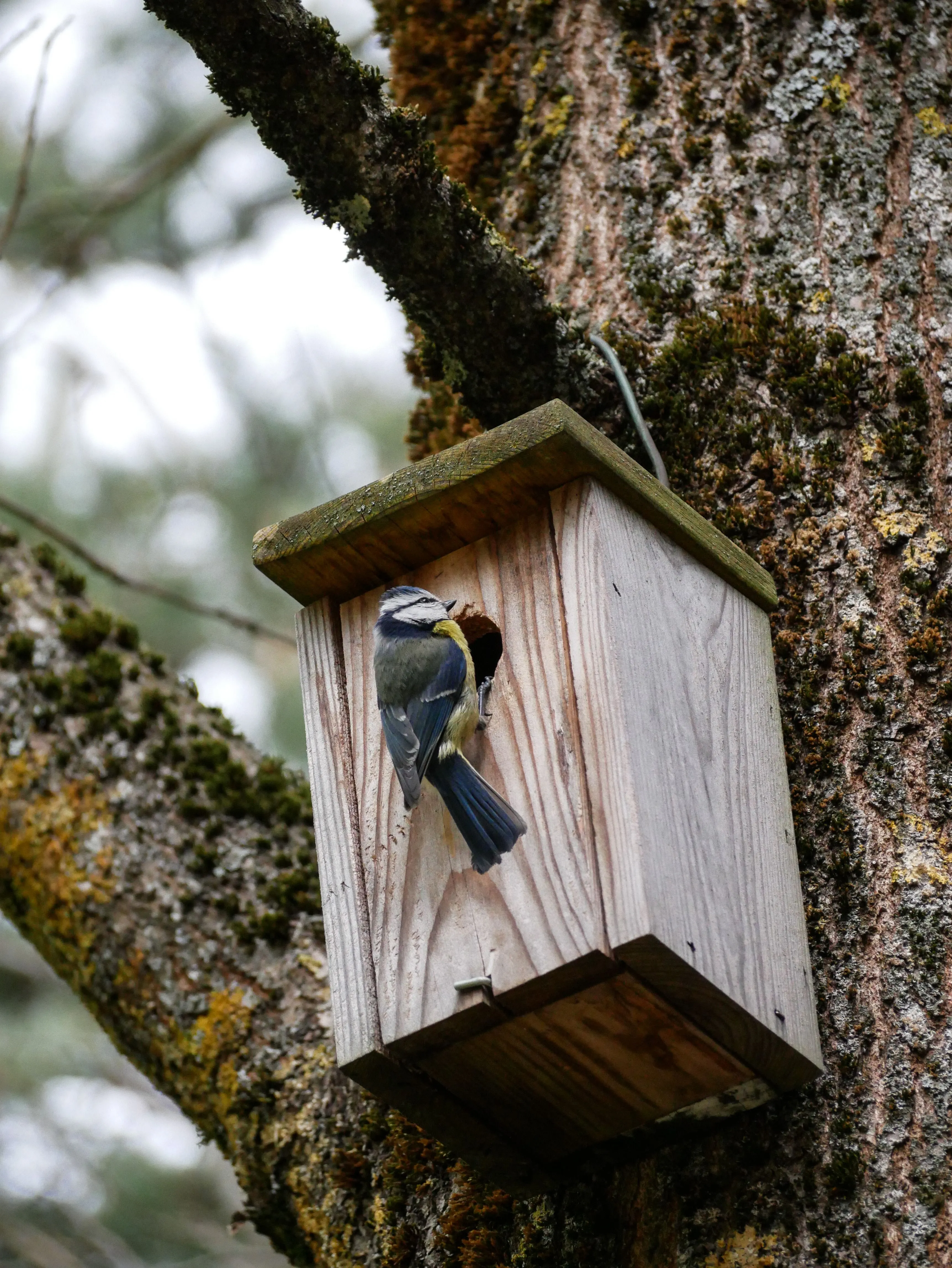
Build And Put Up Bird Boxes
An afternoon with scrap wood and a drill, and next spring something moves in.
- Cost
- Free / Under £20pp
- Time
- Half-day
- People
- Solo / Duo, Small Group (3-6), Large Group (7+)
- Where
- Home, Park / Outdoor
- Bring
- Untreated wood, screws, a drill
Why this matters
Many bird species nest in cavities in old trees and building eaves, both of which have been steadily removed by modern building standards and tidier land management. Nest sites are now a genuine limiting factor on populations. Boxes work - occupancy rates are high where they're well made and correctly sited - and one box lasts years.
How to do it
Build from untreated, rough-sawn timber at least 15mm thick. Thin or planed wood doesn't insulate and won't last outdoors.
The single most important detail is the hole size, because it determines which species can use it and which predators can't: - 25mm for blue tits and coal tits - 28mm for great tits - 32mm for house sparrows and nuthatches - Open-fronted boxes for robins and wrens, sited low and hidden in vegetation
Other build points: - Rough the inside below the hole so chicks can climb out - Drill small drainage holes in the base - Sloping, overhanging roof, hinged if you want to clean it - No perch below the hole. Perches only help predators. - Don't paint or treat the inside. Untreated is correct.
Siting matters as much as the build: - Face north through east, away from strong sun and driving rain - Two to four metres up, tilted slightly forward so rain runs off - Clear flight path to the hole, not smothered in foliage - Well away from feeders, which attract too much traffic and disturbance - Put it up in autumn or winter, before the breeding season
Clean it out in autumn once the season's over. That's it for maintenance.