Build An Insect Hotel Together
An afternoon, some scrap wood and bamboo, and you've made habitat for the pollinators that everything else depends on.
- Cost
- Free / Under £20pp
- Time
- Half-day
- People
- Solo / Duo, Small Group (3-6), Large Group (7+)
- Where
- Home, Park / Outdoor
- Bring
- Scrap wood, bamboo canes, drill
Why this matters
Solitary bees do a large share of pollination and are declining faster than honeybees, largely because the dead wood, hollow stems and bare ground they nest in have been tidied out of gardens and parks. Artificial nesting sites genuinely work and are occupied within a season. It's also one of the few conservation actions with an immediate, visible result.
How to do it
This is a proper afternoon project and one of the best ones to do with kids.
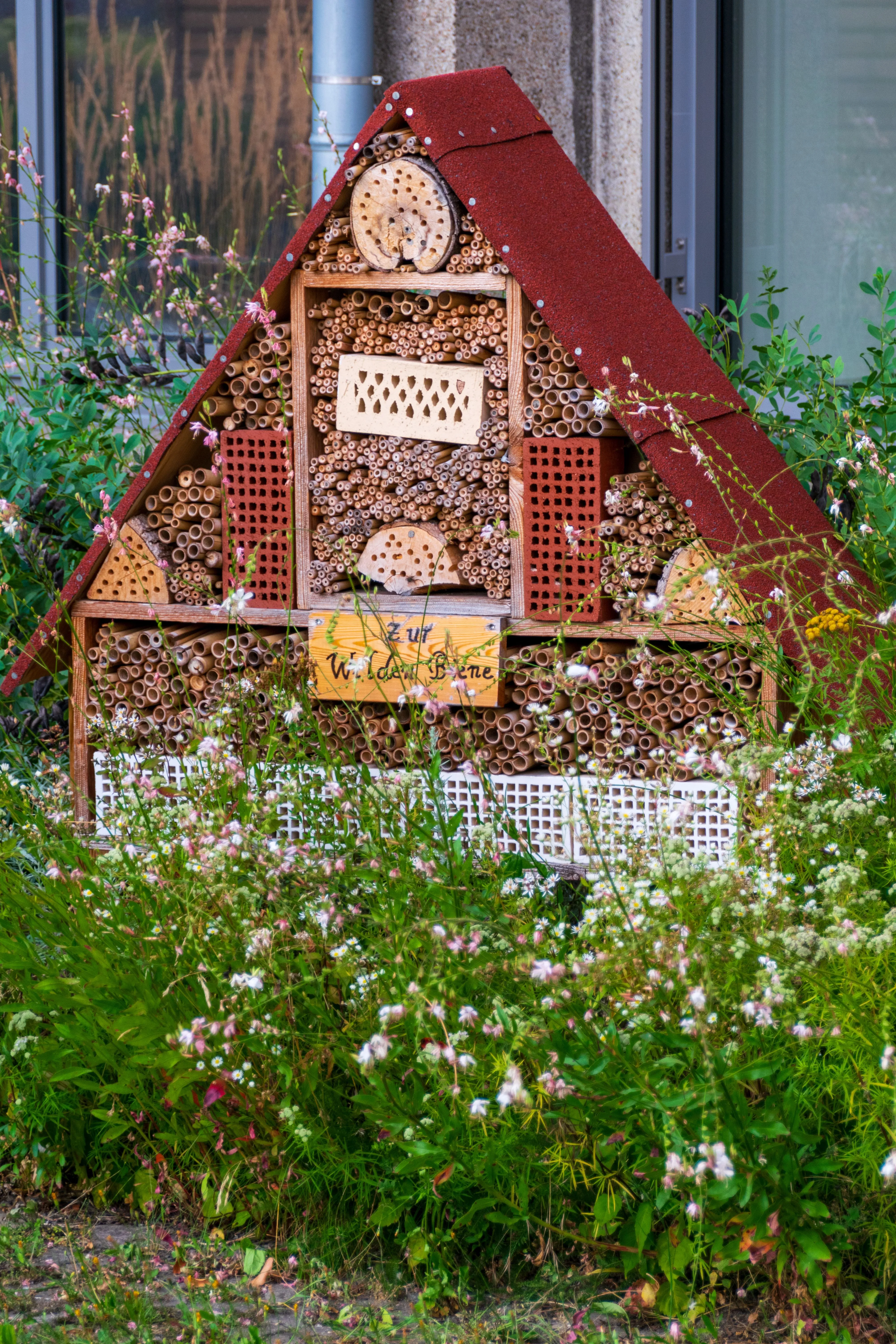
The basic build: a wooden frame or box, open at the front, packed with materials that create tunnels and cavities.
What to fill it with: - Bamboo canes and hollow stems, cut so the back end is sealed - Blocks of untreated hardwood with holes drilled 2-10mm wide and about 10cm deep - Drilled logs, pine cones, bark, dry hollow plant stems
What to avoid, because a lot of shop-bought ones get this wrong: - Plastic tubes, which trap condensation and cause mould - Rough or splintered hole edges, which damage bees' wings - sand them - Holes drilled all the way through. They need a sealed back. - Making it enormous. Several small hotels spread out beat one giant one, which concentrates disease and parasites.
Siting matters as much as the build: face it south or south-east for morning sun, mount it firmly about a metre up, keep it dry and sheltered from rain, and don't move it once occupied.
Then leave it alone. It'll look empty for weeks and then quietly fill up. Clean or replace tubes every couple of years to stop parasites building up.